Chapter 03 · The Tour
The equipment
A handful of steel boxes, fittings, and rail cars — engineered to lock together the same way everywhere on earth.
The whole industry rests on standardized steel. An ISO container is a Series 1 freight box built to ISO 668, which classifies these containers and fixes their external dimensions and weight ratings [1]. A standard 20-foot box runs about 6.058 m long, 2.438 m wide, and 2.591 m high; a 40-foot box doubles the length to 12.192 m at the same width and height. Since its 2016 amendment, ISO 668 rates standard containers to a maximum gross mass of 36,000 kg — about 79,370 lb[2]. The older 30,480 kg (67,200 lb) rating is still stenciled on many boxes in service[3]. A high-cube variant adds a foot of height for more cube on the same footprint.
North America also runs its own box. The 53-foot domestic container is about 53 ft long, 102 in wide, and commonly 9 ft 6 in high — wider and taller than an ocean ISO box, for roughly 3,850 cubic feet of capacity [4]. Empty, it weighs around 12,000 lb (tare ~5,490 kg); on the road the binding ceiling is the U.S. 80,000-lb gross limit for the entire tractor-chassis-container-cargo combination[5]. Because no single ISO standard governs it, the 53-foot box follows North American industry practice rather than international rule.
How it all locks together
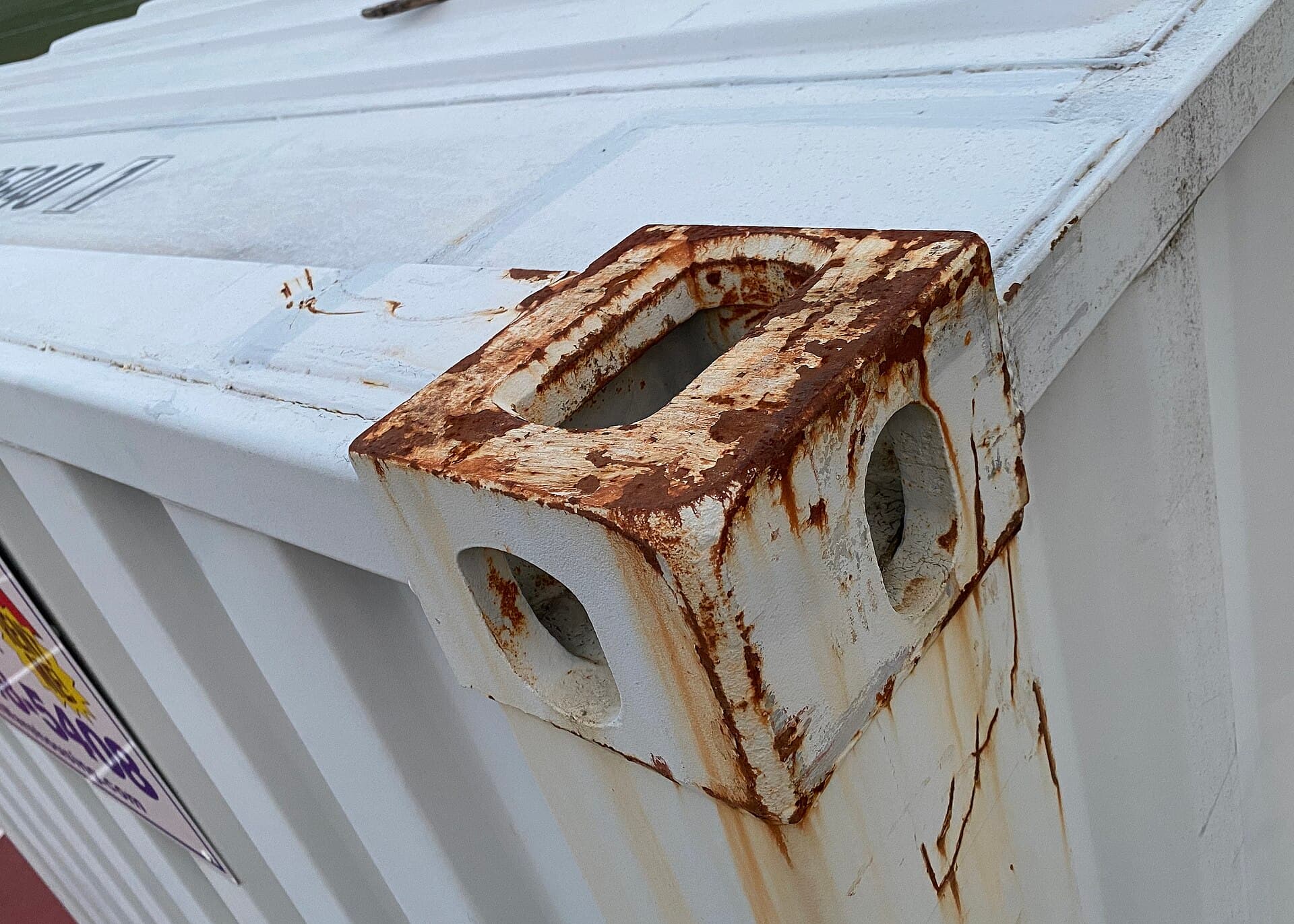
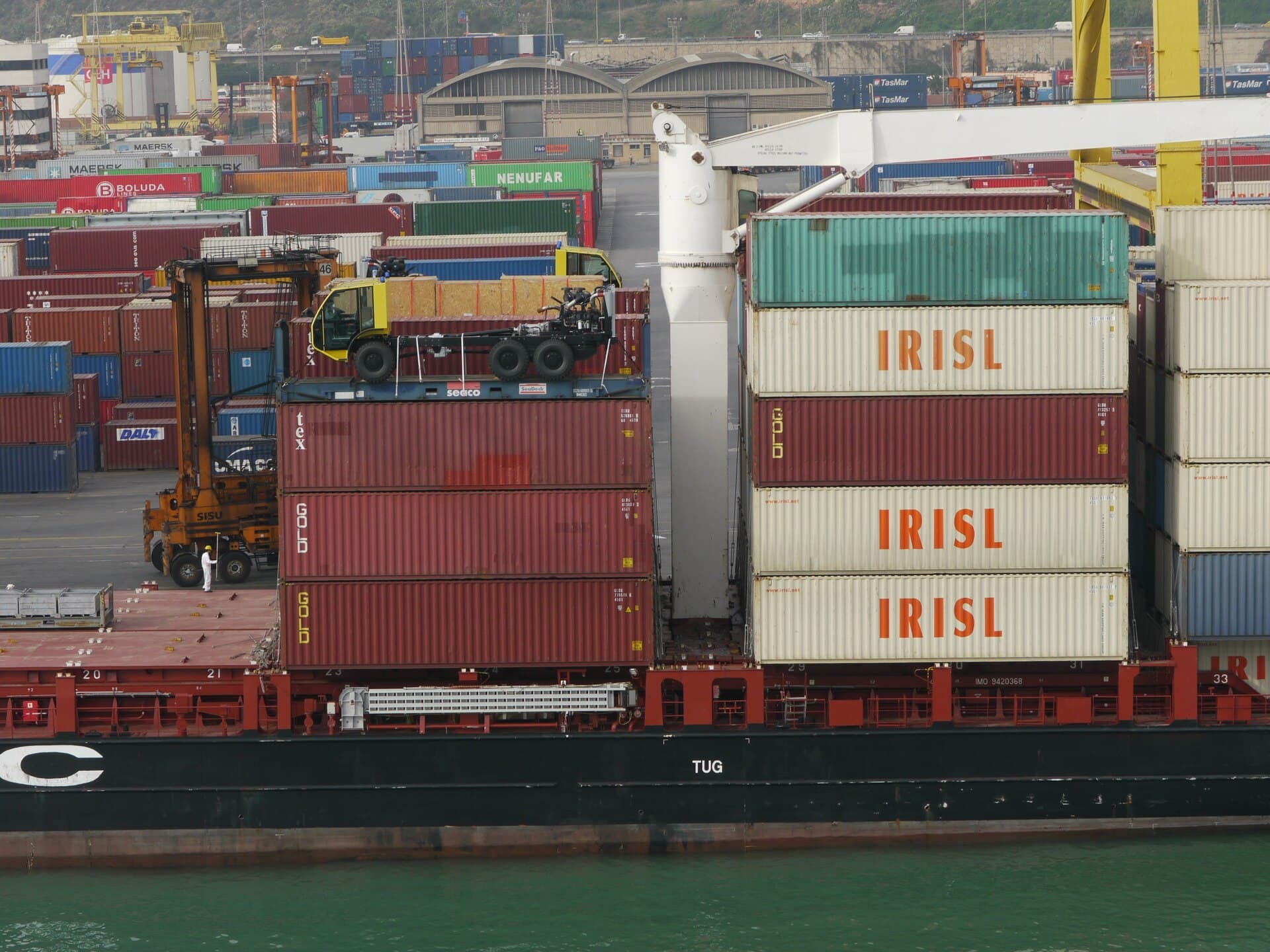
The genius is in the corners. Each container carries eight cast-steel corner castings, specified under ISO 1161, that let cranes lift, lock, stack, and lash the box — giving it interchange compatibility across every handling system and mode [6]. That single shared feature is what makes containers interoperable worldwide[7]. A twistlock drops into a casting's oval aperture and rotates to lock, fastening the box to a crane spreader, a chassis, a ship's deck, or the container stacked below [8]. When two boxes ride stacked, an inter-box connector joins the upper one to the lower so the pair travels as a unit.
Ocean trade is counted in 20- and 40-foot ISO boxes (TEU); inland North America runs on the longer, taller 53-foot domestic container. High-cube boxes add a foot of height for more cubic capacity at the same footprint.
Beyond the standard box
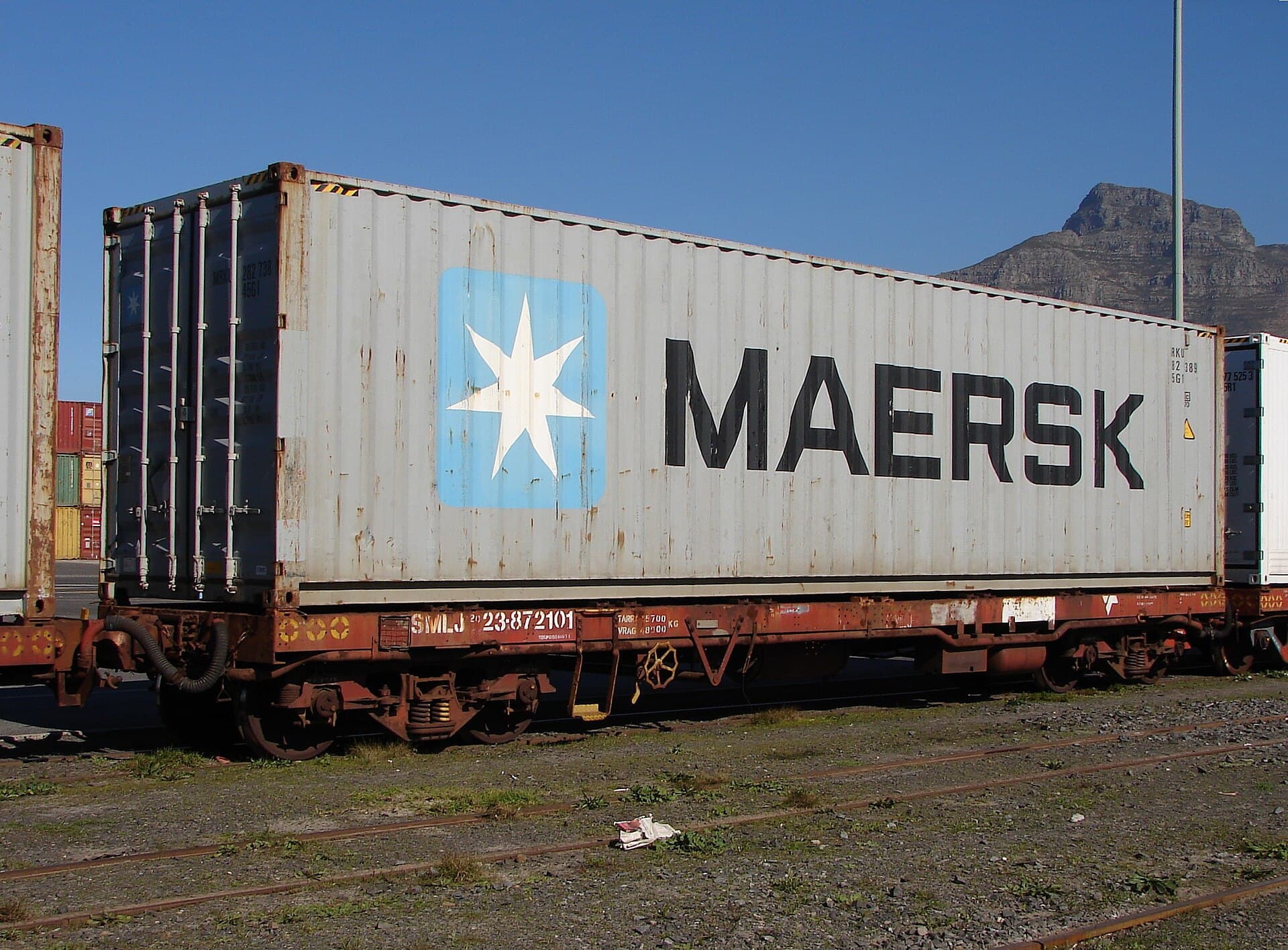
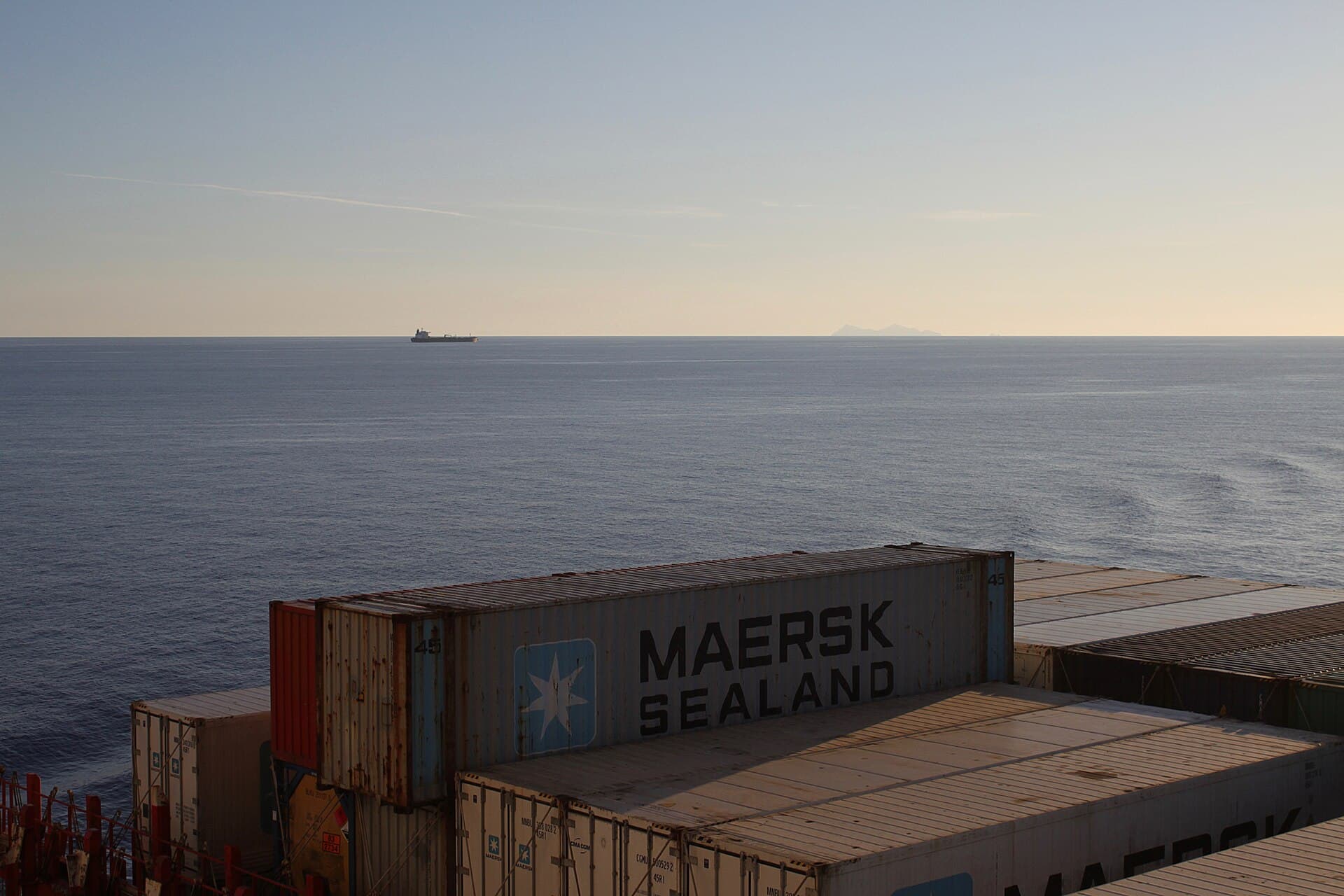
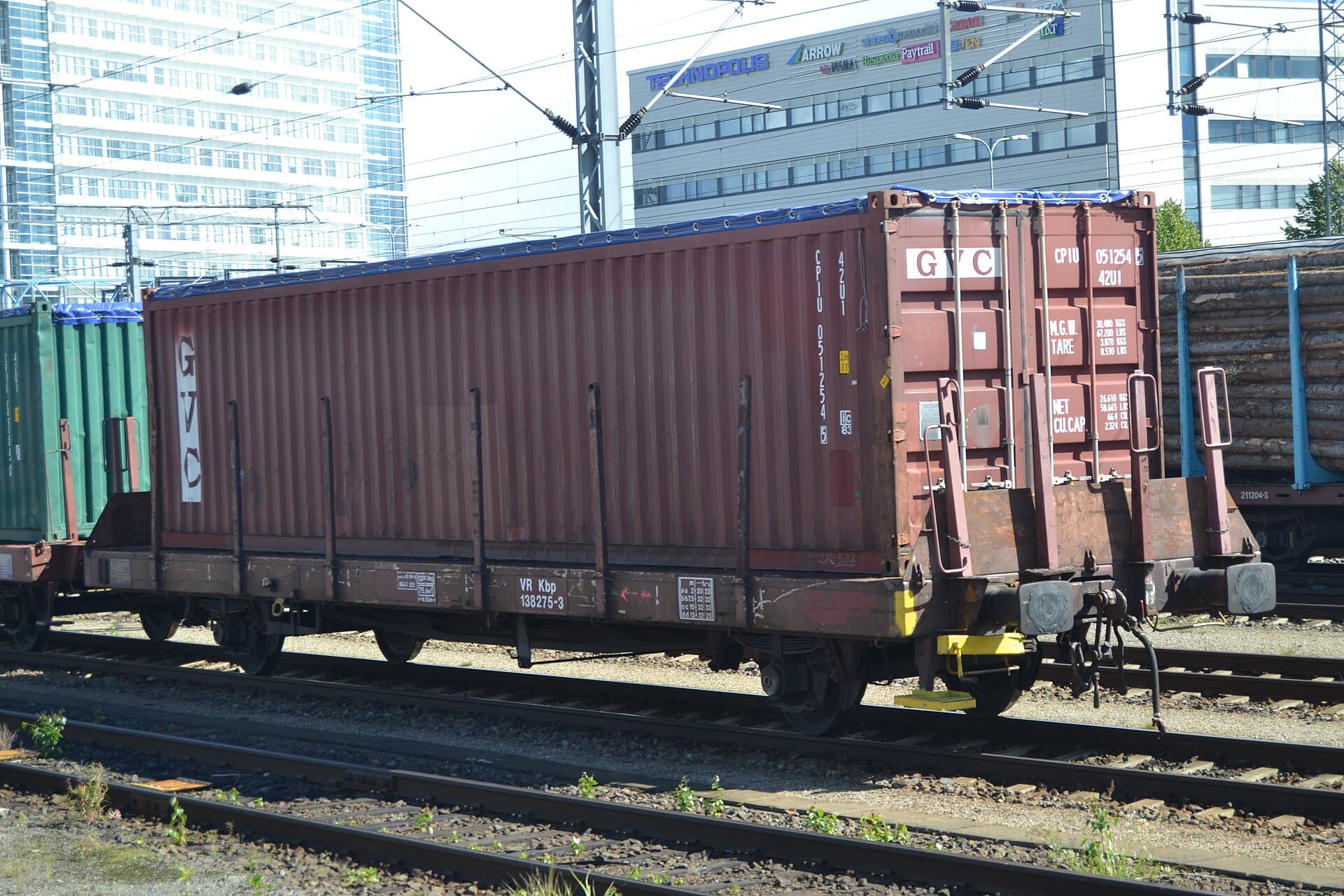
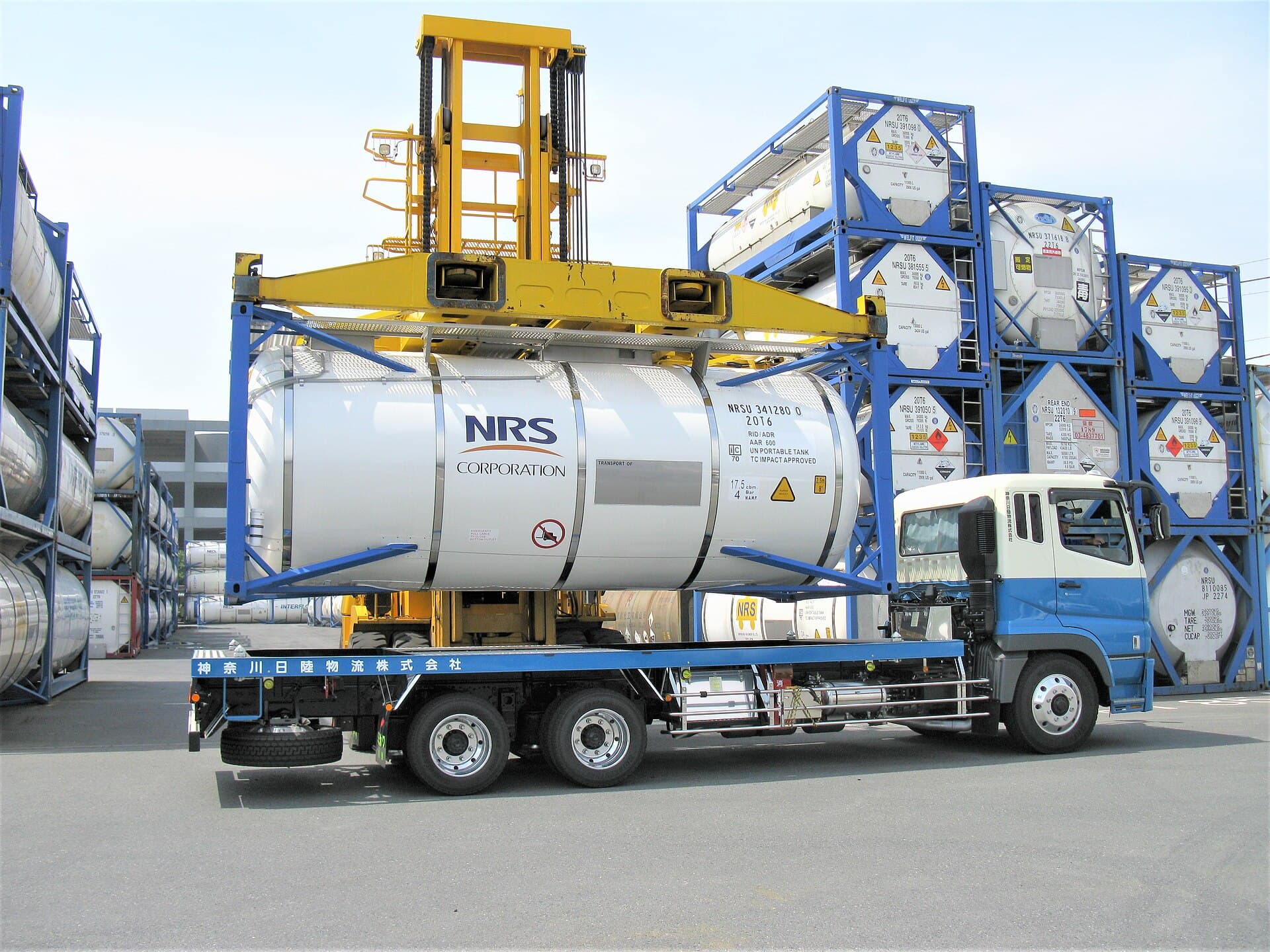
The same corner-casting footprint carries a whole family of containers, each adapted to a kind of cargo — taller, longer, open, tanked, or floored.
The chassis
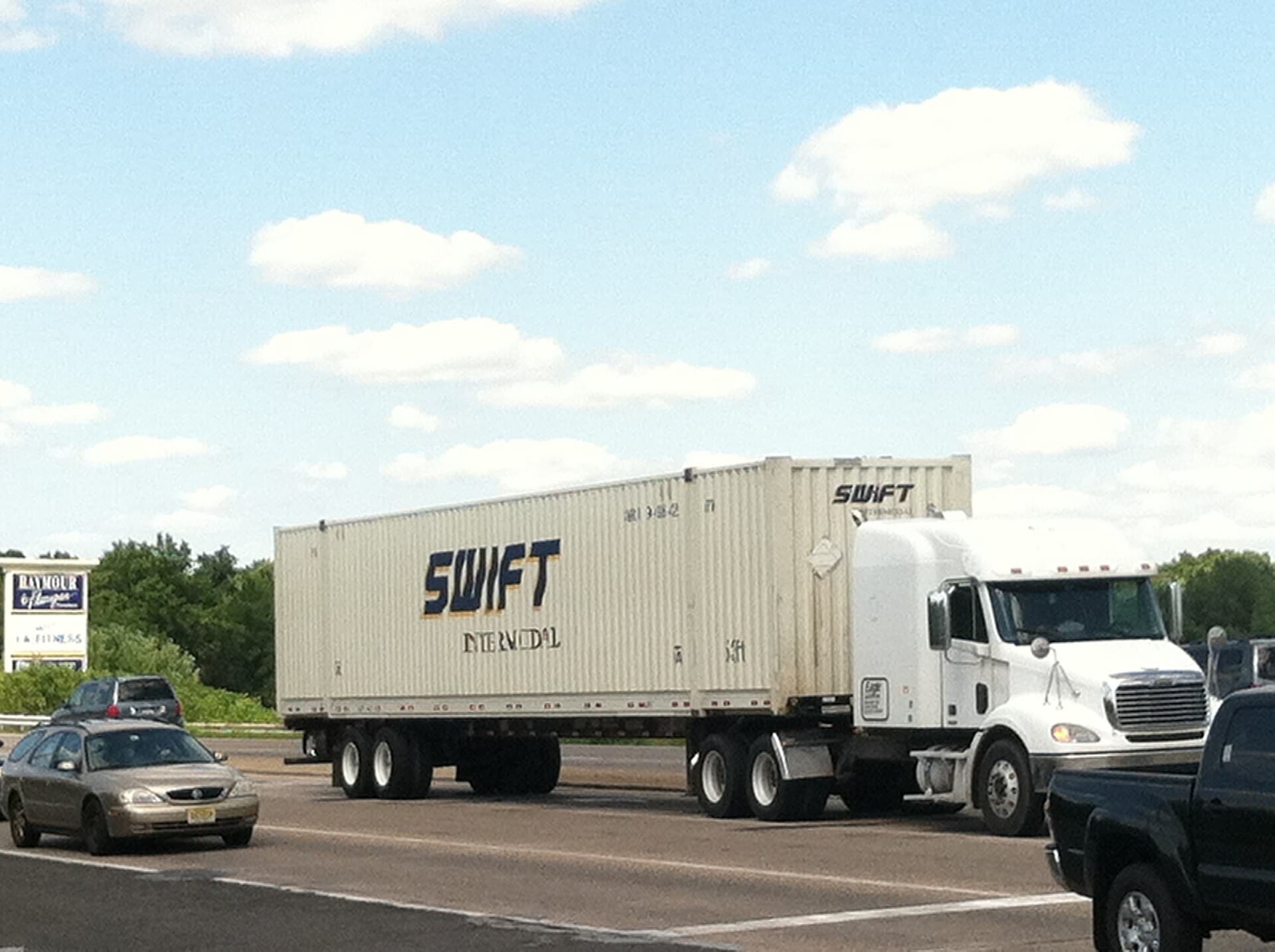
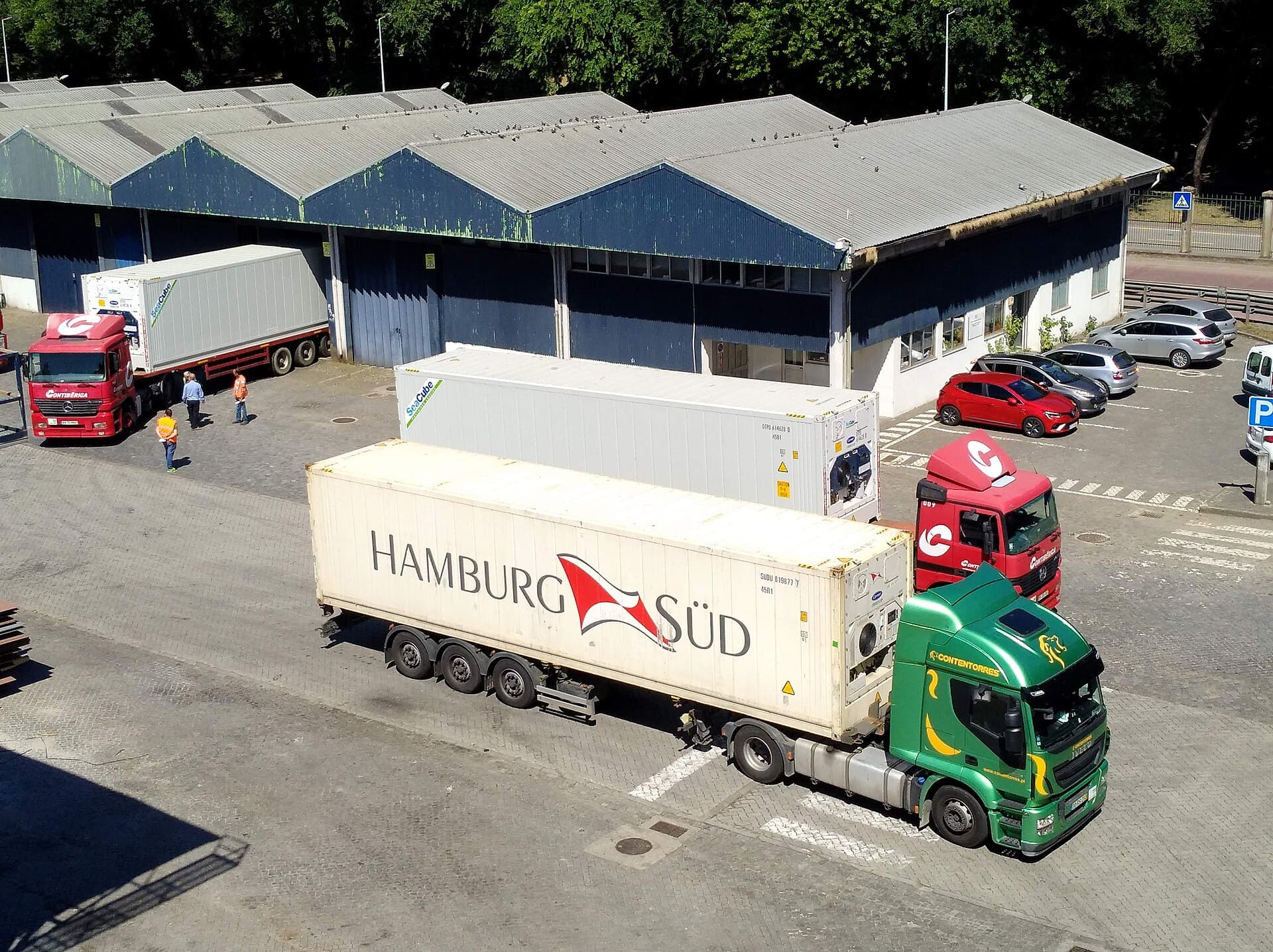
A chassis is the wheeled steel trailer frame that carries a container on the road. The box locks down to it through twistlocks at the corner castings, and the chassis supplies the kingpin, landing gear, axles, brakes, and lighting[9]. A 53-foot domestic box rides on a dedicated gooseneck chassis sized to its length. When a container and an available chassis are not in the same place, the trucker faces a chassis split — a separate trip to a pool or depot that adds miles, time, and a fee[10].
The double-stack well car
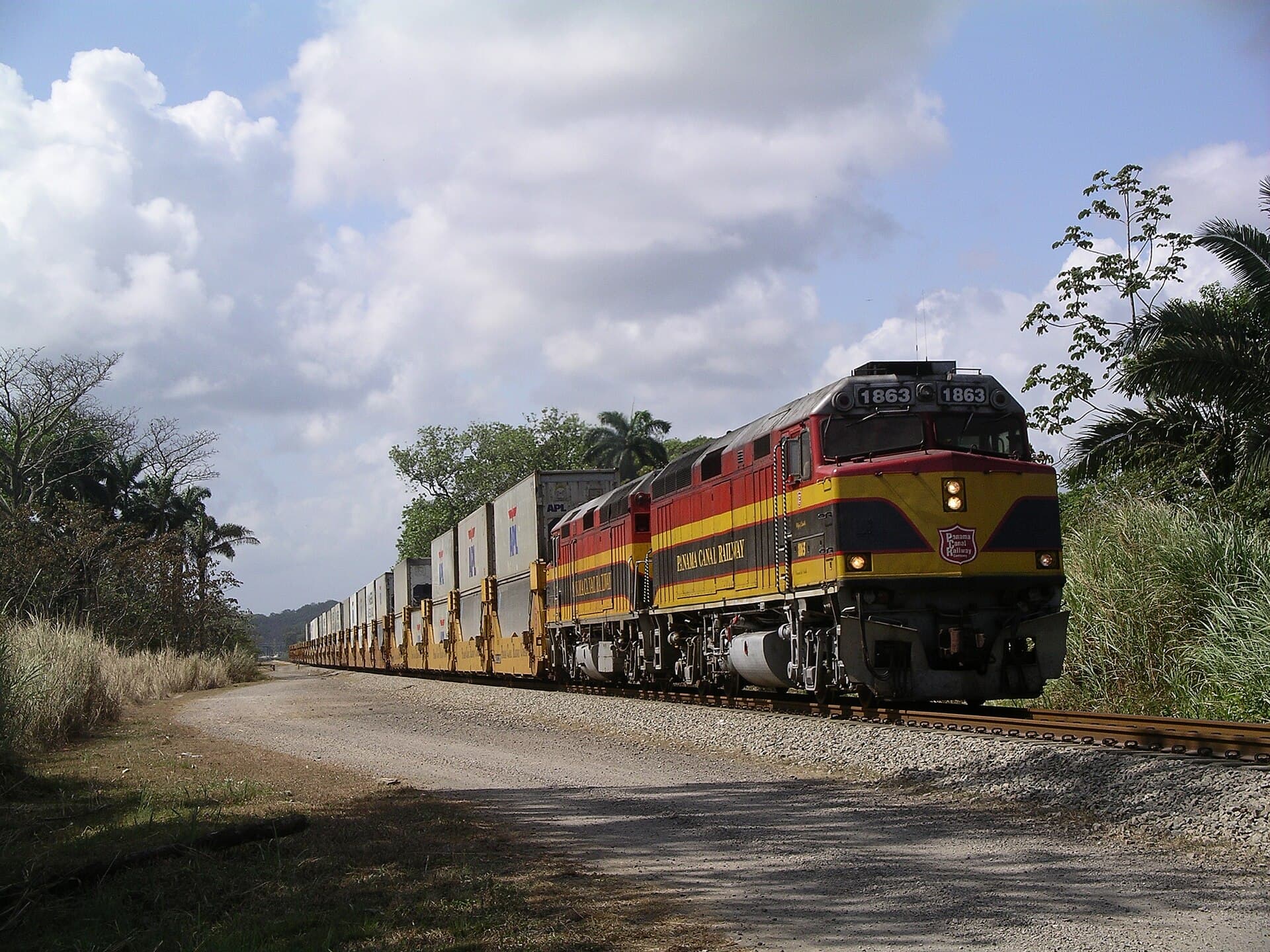
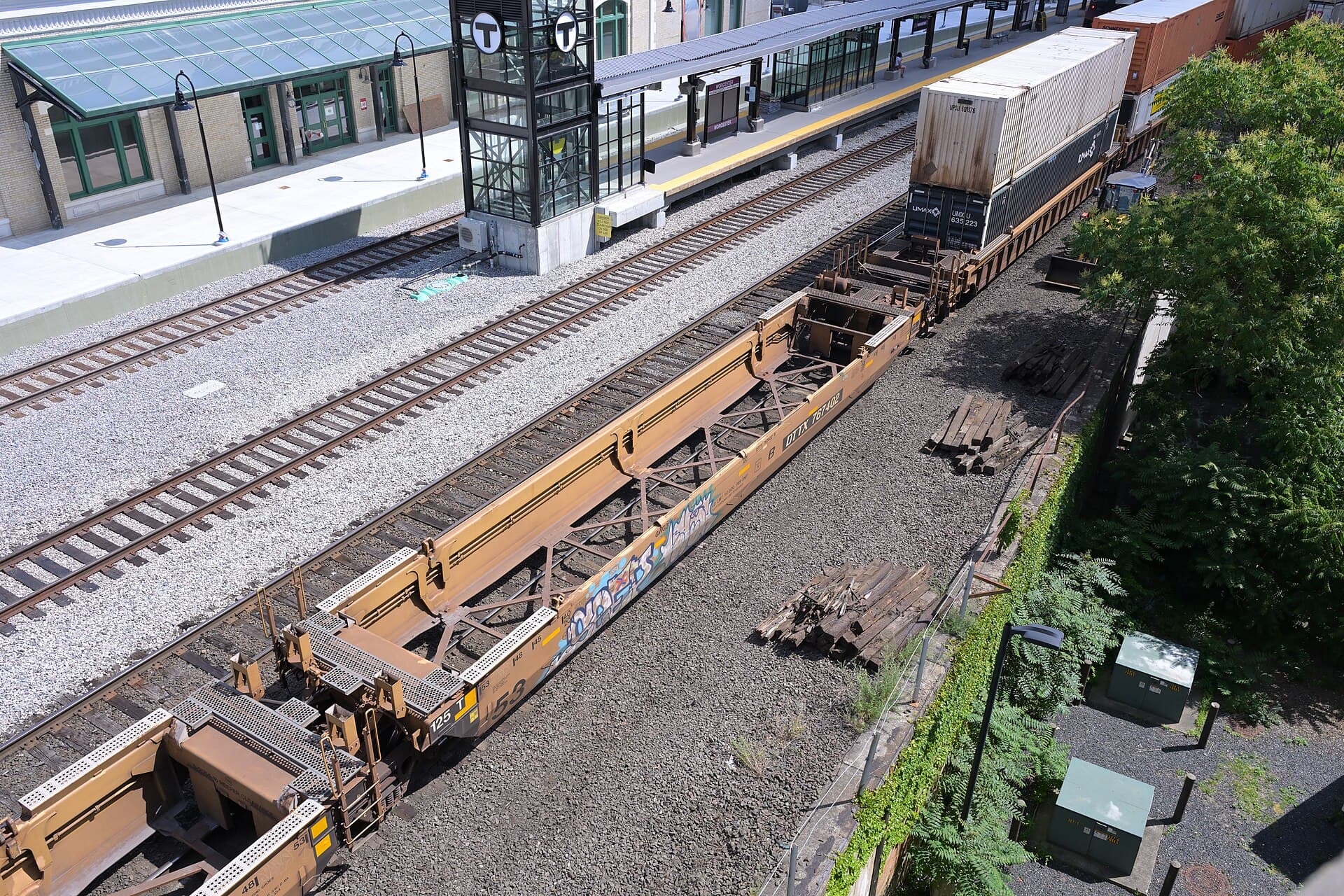
A well car is an evolved flatcar with a central depression — the “well” — that lets a container ride low between the wheel trucks, leaving room to stack a second box on top within clearance limits[11]. Stacking two containers per car roughly doubles the container capacity of a train of a given length, sharply cutting the cost per box [12]. Union Pacific puts double-stack at nearly 70% of U.S. intermodal shipments today [13]. The approach was not obvious — it took American President Lines, with the Thrall Company and Union Pacific, to refine the well car into the first all-double-stack train (the history chapter has the timeline)[14].
Reefers and gensets
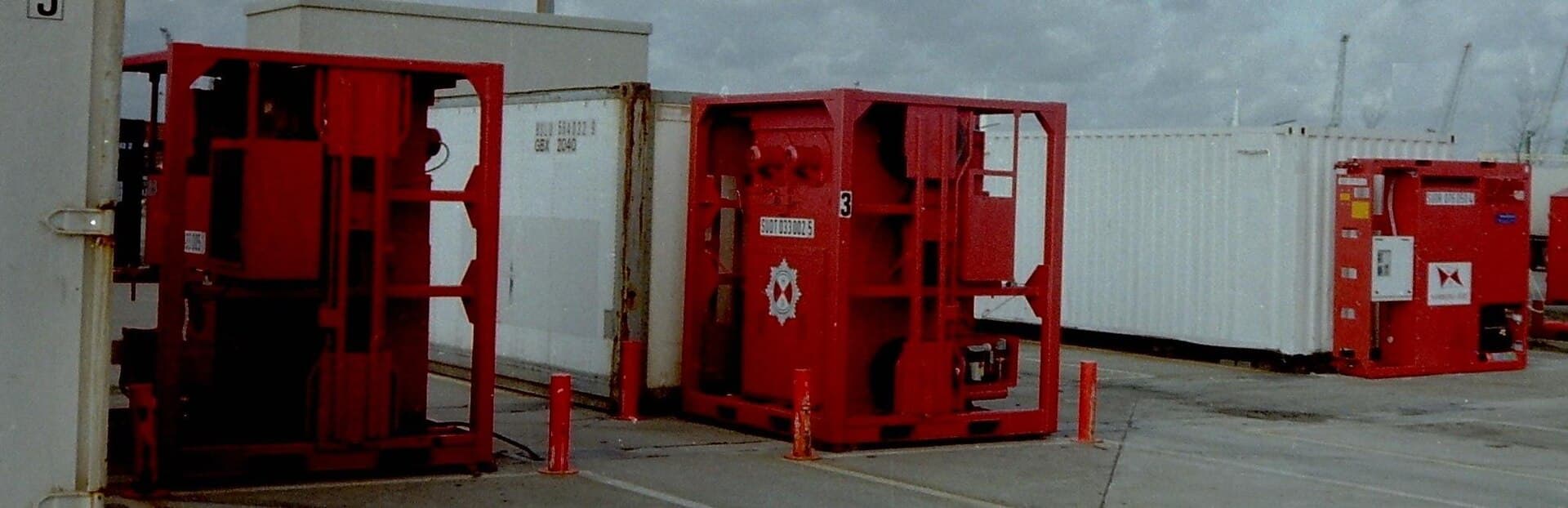
A reefer is a refrigerated container with an integral cooling unit that holds a set temperature — typically across roughly −35 °C to +30 °C — for the whole journey [15]. The unit draws a steady three-phase supply (commonly 460V); when ship or shore power is unavailable, a diesel genset — clip-on, under-mount, or on-chassis — keeps it running during drayage[16]. That is what lets a cold chain stay unbroken from ship to ramp to door.