
Reference
Glossary
Every piece of intermodal jargon, in plain language. Terms used throughout the tour link here; jump in anywhere, or search.
Operations
- Break-bulk
- Break-bulk is the older way of moving freight, before the container: individual crates, sacks, barrels, and pallets were each handled separately on and off a ship. It was slow, labor-intensive, and expensive, and it left cargo exposed to damage and theft. Containerization replaced it by turning the box itself into the single handling unit.
- Wikipedia
- Chassis split
- A chassis split happens when the container and a usable chassis are not in the same place, so the trucker must make a separate run to a pool or depot to fetch one. It adds miles, time, and usually a fee to a drayage move. Splits are a common friction point that can jam up port and ramp operations.
- Clearance (double-stack)
- Clearance is the vertical room a route must offer for double-stacked containers to pass under bridges and through tunnels. Stacking two boxes high needs roughly 5.5 meters (about 18 feet) of space, which not every line has. Where clearance falls short, trains can only run single-stack, limiting where double-stack economics apply.
- Source
- COFC (Container on Flatcar)
- COFC means carrying just the container body on a rail well car or flatcar, without its highway chassis and wheels. Dropping the road gear lowers the load and frees up space, which is what allows two containers to ride in a single well. Federal regulation defines COFC as the rail movement of a freight-laden intermodal container, and it is now the dominant form of intermodal rail.
- Source
- Demurrage
- Demurrage is the fee that accrues when a container sits at the marine terminal longer than the free time it is allotted. It is meant to push cargo to move out of the port promptly and keep the terminal flowing. It is distinct from detention, which covers equipment kept too long after it has already left the terminal.
- SourceU.S. FMC
- Detention
- Detention is the fee charged for extended use of carrier equipment — the container or chassis — once it has left the marine terminal and is not returned on time. Where demurrage applies inside the terminal, detention applies out on the street after gate-out. Both exist to keep equipment cycling rather than sitting idle.
- Source
- Double-stack
- Double-stacking carries two containers vertically in each well car, which roughly doubles the number of containers a train of a given length can haul. That sharply lowers the cost per container and is the core efficiency behind COFC rail. It depends on adequate vertical clearance along the route, which is why not every line can run it.
- SourceWikipedia
- Drayage
- Drayage is the short trucking leg that carries a container between a port or rail ramp and a nearby warehouse, yard, or customer dock. It is the first and last mile of an intermodal trip — the connective tissue that links ship and rail to the road. Its emissions and cost are added on top of the rail line-haul at each end of the journey.
- Wikipedia
- Drayage interoperability
- Drayage interoperability is the ability for any motor carrier to grab any chassis from a shared, neutral 'gray' pool, no matter who owns it. By removing the need to match a specific chassis to a specific carrier, it cuts cost and friction in the short truck moves around ports and rail ramps. It is widely cited as the most cost-efficient chassis model.
- Source
- Dwell
- Dwell is the time a container sits idle at a marine or rail terminal between when it arrives and when it moves on. It is usually measured in days and watched closely as a sign of congestion. Long dwell ties up equipment and yard space and can ripple delays through the whole supply chain.
- Empty repositioning
- Empty repositioning is the costly business of shipping empty containers out of import-heavy regions back toward export-heavy ones to correct trade imbalances. Because more goods flow in than out of many markets, empties pile up in one place and run short in another. Carriers move these boxes empty by ship, rail, or truck to keep equipment where loads are waiting.
- Source
- Intermodal
- Intermodal freight is the movement of a single sealed container or trailer across two or more transport modes — typically ship, rail, and truck — without the cargo inside ever being handled. The box itself is transferred between modes, not its contents. Because the goods are never touched in transit, transfers are faster, theft and damage drop, and each mode does the leg it does best.
- SourceWikipedia
- IPI (Inland Point Intermodal)
- IPI, or inland point intermodal, is an import container that moves by rail directly from the port to an interior destination under a single through bill of lading. Rather than being trucked or transloaded near the port, the original ocean box travels inland intact. It is one of the main ways imports reach the middle of the continent.
- Source
- Land bridge
- A land bridge is the overland rail portion of an ocean container's trip, carrying it across a continent instead of all the way around by sea. A 'mini land bridge' rails a Trans-Pacific import box from a West Coast port to an East Coast destination. It trades a longer all-water route for a faster ship-then-rail combination.
- Wikipedia
- Line-haul
- Line-haul is the long-distance, terminal-to-terminal portion of a freight move, which in intermodal is the rail leg between ramps. It is distinct from drayage, the short truck trips at each end. Rail efficiency and emissions figures usually describe the line-haul only, before drayage is added on.
- Mode
- A mode is a means of moving freight — ocean ship, rail, or truck. Intermodal is defined by using two or more of them for a single shipment. Each mode has its own strengths, and combining them is what lets a container travel efficiently from origin to destination.
- Mode shift
- Mode shift is the act of moving freight from one transportation mode to another — in this context, from truck to rail. It is the change that produces intermodal's claimed fuel and emissions savings. Because rail is far more fuel-efficient over long distances, shifting freight onto it can sharply cut cost and greenhouse-gas emissions.
- Source
- Ramp
- A ramp is an intermodal rail terminal — the yard where containers transfer between truck and train. 'On-dock' and 'near-dock' ramps sit at or right beside a marine port, while others are inland. It is where drayage trucks hand containers off to the rail line-haul and pick them up again.
- Single-line service
- Single-line service is when one railroad carries freight the whole way over its own network, never interchanging it to another carrier. Avoiding the handoff between railroads cuts delay and complexity. CPKC became the first railroad to offer it across Canada, the United States, and Mexico.
- Source
- Street turn
- A street turn reuses an empty import container directly for a nearby export load rather than hauling it back to the port or depot first. It cuts out empty miles and saves on per-diem charges. As an efficiency move, it is the counterpoint to costly empty repositioning.
- TOFC (Trailer on Flatcar)
- TOFC, often called 'piggyback,' loads a complete highway trailer — chassis and wheels included — onto a rail flatcar. Federal regulation defines it as the rail movement of a freight-laden truck or trailer. Because the road gear rides along and sits higher, it cannot double-stack, and the segment has steadily declined in favor of COFC.
- SourceWikipedia
- Transload
- Transloading shifts the contents of arriving ocean ISO containers into larger 53-foot domestic boxes near the port. Because the domestic box holds more, the contents of roughly three maritime boxes commonly fit into two domestic ones, cutting inland transport cost by about 30%. The empty ocean boxes can then return quickly to circulation.
- SourceWikipedia
Equipment
- 53-foot container
- The 53-foot container is the workhorse of North American inland freight, built to match the longest trailer allowed on U.S. highways. It runs wider and taller than an ocean ISO box — about 102 inches wide and commonly 9 feet 6 inches high — so it holds materially more cargo per move. Because no single ISO standard governs it, its dimensions are set by North American industry practice rather than international rule.
- SourceWikipedia
- Chassis
- A chassis is the wheeled steel frame that carries a container over the road behind a truck. The box locks down to it through twistlocks at the corner castings, and the chassis supplies the kingpin, landing gear, axles, brakes, and lights. Without one, a container simply cannot move by truck.
- Wikipedia
- Chassis pool
- A chassis pool is a common fleet of chassis that multiple trucking companies can pull from, operated by neutral leasing firms or cooperatives. It replaced the older model in which each ocean carrier owned its chassis and handed them to truckers for free. Pooling spreads the equipment across users and keeps chassis available where containers actually need them.
- Corner casting
- Corner castings are the cast-steel fittings at all eight corners of a container, standardized under ISO 1161. Their apertures let cranes lift the box, let twistlocks secure it, and let containers stack and lash to one another. This single shared feature is what makes containers interchangeable across cranes, chassis, ships, and rail cars.
- SourceISO 1161
- Dry van
- A dry van is the common enclosed highway trailer used for general freight. The 53-foot domestic container is built to share its loading dimensions, so cargo packed for one fits naturally in the other. That compatibility helped the 53-foot box become the dominant inland intermodal unit in North America.
- Genset
- A genset is a portable diesel generator that supplies electricity to a refrigerated container when ship or shore power is not available. It can clip on, mount under the chassis, or sit on the chassis itself, keeping the reefer running during the road leg. Gensets are what let temperature-controlled cargo stay cold all the way through an intermodal trip.
- Source
- High-cube container
- A high-cube container is a taller version of the standard ISO box, standing 9 feet 6 inches rather than the usual 8 feet 6 inches. The extra foot of height adds cargo volume without changing the footprint. High-cube boxes are common in the 40-foot and 45-foot sizes and on North American domestic containers.
- Wikipedia
- Inter-box connector
- An inter-box connector is a fitting that links a stacked upper container to the lower one so the two ride together as a single unit. It engages the corner castings between the boxes to keep the stack secure in transit. On a double-stack rail car it helps the two containers travel safely as one load.
- ISO container
- An ISO container, or Series 1 freight container, is the standardized ocean box built to ISO 668 — most often 20 or 40 feet long, 8 feet wide, and either 8 feet 6 inches or 9 feet 6 inches tall. It is the sealed unit that gets handled, so the cargo inside never has to be touched between modes. Its worldwide standardization is what makes global container shipping work.
- SourceWikipedia
- Reefer
- A reefer is a refrigerated intermodal container with an integral cooling unit that maintains a chosen temperature throughout the trip. It draws power from ship or shore connections, or from a diesel genset during the road leg. Reefers keep perishable and temperature-sensitive cargo within range across the whole intermodal journey.
- SourceWikipedia
- Twistlock
- A twistlock is a rotating locking device that slots into a corner casting's aperture and turns to lock. It secures a container to a crane spreader, a chassis, a ship's deck, or the box stacked beneath it. This simple, standardized mechanism is central to how containers stay fixed across every mode of transport.
- SourceWikipedia
- Well car
- A well car is an evolved flatcar with a recessed central 'well' that lets a container ride low between the wheel trucks. Sitting the bottom box down low leaves room to stack a second one within clearance limits. The well car is the equipment that makes double-stack rail possible.
- SourceWikipedia
Players
- Alliance
- An alliance is a cooperative arrangement in which competing ocean carriers share slots aboard each other's vessels along shared trade lanes. It pools capacity, not ownership or pricing, so each line still books and prices its own cargo. The major current groupings are the Gemini Cooperation, the Ocean Alliance, and the Premier Alliance, with MSC operating largely on its own.
- Source
- BCO (Beneficial Cargo Owner)
- A beneficial cargo owner is the importer or owner of the goods who manages its own freight rather than handing the job to a forwarder or NVOCC. BCOs contract directly with carriers and service providers, giving them more control over routing and cost. They are the end customers that intermodal marketing companies ultimately serve.
- Source
- Class I railroad
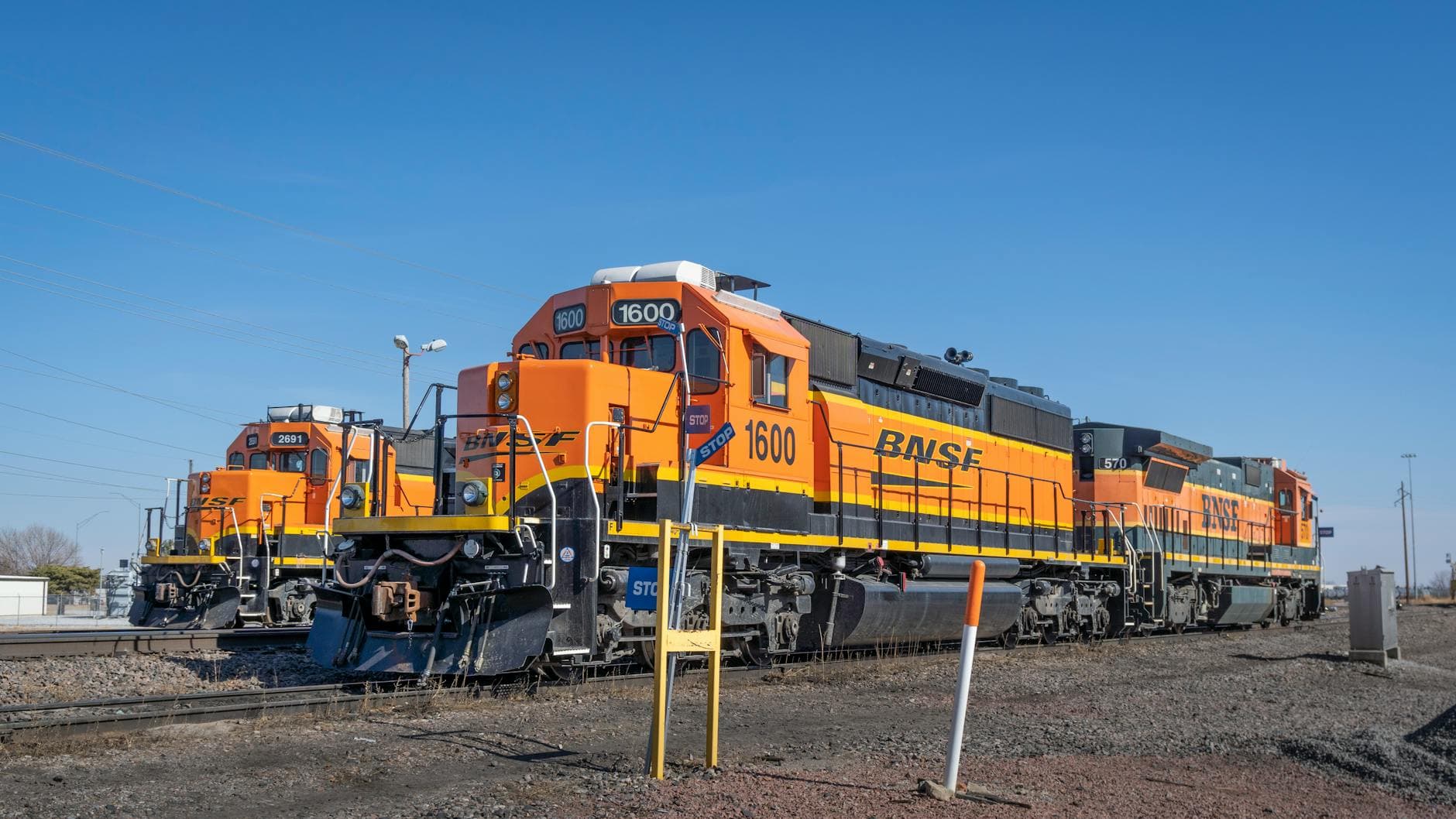
- A Class I railroad is one of the largest freight railroads, defined by the Surface Transportation Board through an annual operating-revenue threshold that is indexed for inflation (about $1.075 billion for the 2024 determination). Six operate in North America: BNSF, Union Pacific, CSX, Norfolk Southern, CN, and CPKC. They run the long-distance rail line-haul at the heart of intermodal.
- SourceWikipedia
- IMC (Intermodal Marketing Company)
- An intermodal marketing company buys rail intermodal capacity wholesale straight from the railroads, arranges the drayage and equipment, and sells finished door-to-door service to shippers under a single freight bill. IMCs exist because railroads chose to sell intermodal wholesale rather than retail. They come in asset, asset-light, and non-asset forms, and a broker that does not buy rail service directly is not an IMC.
- Source
- Marine terminal
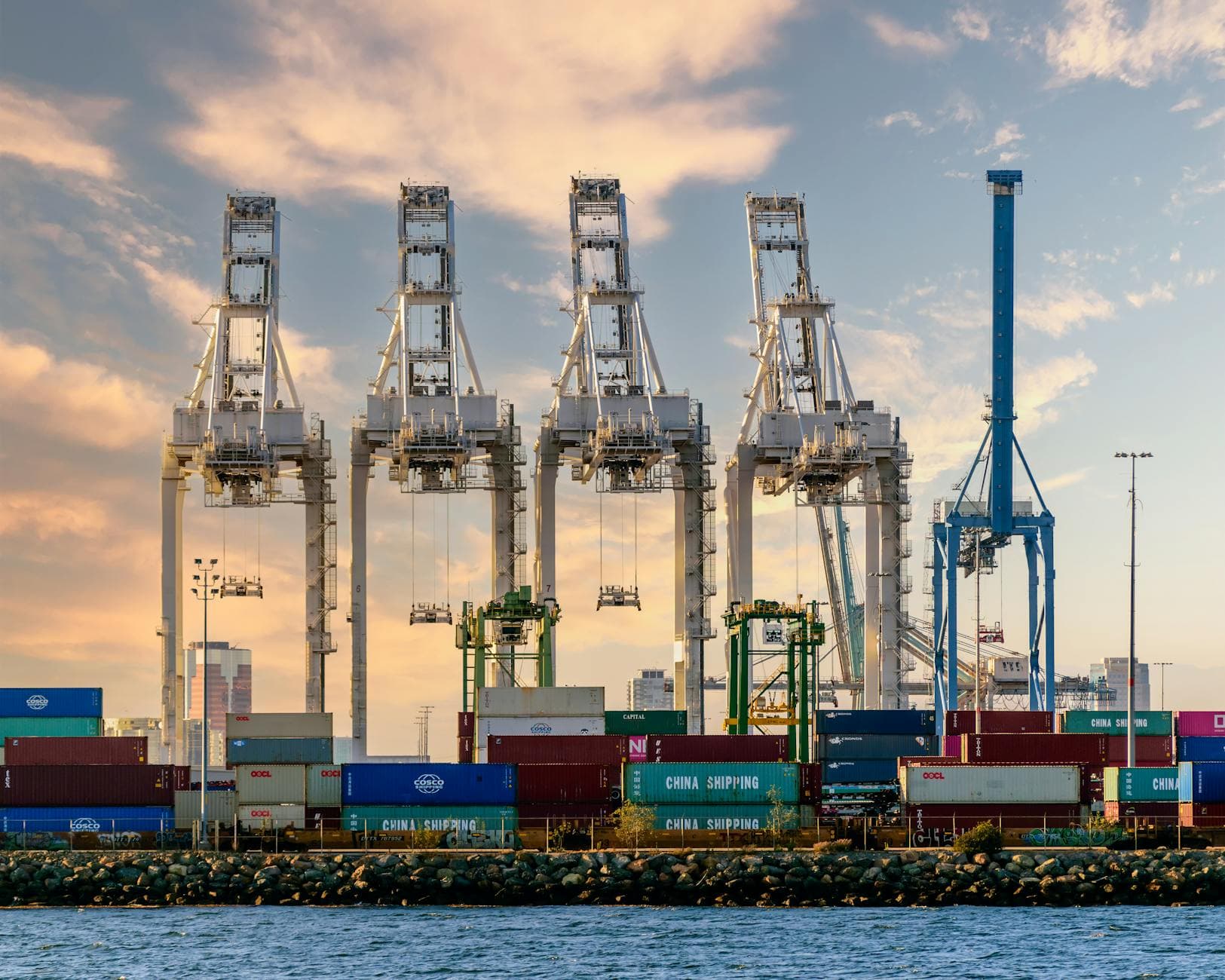
- A marine terminal is the operating facility inside a port where ships dock and containers are lifted on and off and staged for onward movement. It is run by a terminal operating company, which is distinct from the port authority that governs the underlying land. The terminal is where the ocean leg meets the rail and road legs of an intermodal trip.
- Wikipedia
- Short line
- A short line is a smaller local or regional railroad — STB Class II or III — that gathers and delivers traffic to and from the big Class I carriers. Roughly 615 of them operate across the U.S., reaching customers the major roads do not serve directly. They are the capillaries that connect local shippers to the national rail network.
- SourceWikipedia
Units
- FEU (Forty-foot Equivalent Unit)
- The FEU, or forty-foot equivalent unit, counts a single 40-foot container, which equals two TEU. Since the 40-foot box is the most common ocean container, the FEU is a natural real-world counting unit. It is a companion to the TEU used to size container volumes and ship and port capacity.
- SourceWikipedia
- Gross weight
- Gross weight, or maximum gross mass, is the heaviest a loaded container is allowed to be — the box plus everything inside it. ISO 668 sets ratings for standard Series 1 containers, raised to 36,000 kg (about 79,370 lb) under its 2016 amendment. For road moves, the binding ceiling is usually the legal limit on the entire truck-chassis-container-cargo combination.
- Source
- Tare
- Tare is the weight of a container or chassis by itself, excluding any cargo. Subtracting tare from gross weight gives the payload — how much cargo a unit can legally carry. It matters because road moves are capped by the total weight of the whole vehicle combination.
- TEU (Twenty-foot Equivalent Unit)
- The TEU, or twenty-foot equivalent unit, is the standard measure for counting containers: one 20-foot ISO box equals one TEU, and a 40-foot box counts as two. It lets ships, ports, and trade volumes be sized in a single comparable unit. Nearly every container statistic in the industry is expressed in TEU.
- SourceWikipedia
- Ton-mile
- A ton-mile is one ton of freight carried one mile — the standard way to measure freight transport output. It underlies efficiency metrics such as ton-miles per gallon, which capture how far a ton of cargo travels on a gallon of fuel. On average, freight rail can move a ton nearly 500 miles on a single gallon.
- Source
Policy/History
- Containerization
- Containerization is the practice of loading cargo into standardized, stackable, lockable steel boxes that travel intact across ship, rail, and truck without being unpacked along the way. By making the box the handling unit, it collapsed the cost and time of moving goods and reshaped global trade. Malcom McLean pioneered it commercially in 1956.
- Wikipedia
- Deregulation
- Deregulation is the loosening of government control over what an industry can charge and who can compete in it. In U.S. rail, the 1980 Staggers Act was the pivotal step, freeing railroads to price competitively and contract privately with shippers. That shift revived railroad finances and made modern intermodal and double-stack economics possible.
- SourceWikipedia
- FRA R-1 report
- The R-1 is the detailed annual financial and operating report that Class I railroads file with the Federal Railroad Administration. Its standardized data underpins outside analyses of rail performance. Notably, EPA's SmartWay program draws on R-1 figures to build its rail emission factors.
- Source
- GHG (Greenhouse Gas)
- Greenhouse gases are the emissions, mostly carbon dioxide from burning diesel in freight transport, that drive climate change. They are the basis for comparing the environmental footprint of moving freight by rail versus by truck. Shifting freight to rail can cut these emissions substantially for the same cargo.
- Source
- Ideal-X
- The Ideal-X was a converted T2 tanker that carried out the first containerized commercial voyage on April 26, 1956, sailing from Port Newark, New Jersey to Houston with 58 boxes on deck. The sailing is widely treated as the symbolic birth of container shipping. It proved Malcom McLean's idea that cargo could move in standardized boxes rather than loose break-bulk.
- SourceWikipedia
- IMPLAN
- IMPLAN is an input-output modeling system used to estimate the broader economic ripple of an industry — its total output, the jobs it supports, and its investment multipliers. The AAR uses it to gauge freight rail's contribution to the U.S. economy. Its outputs are model estimates rather than direct counts.
- Source
- ISO 668
- ISO 668 is the international standard that classifies Series 1 freight containers and sets their external dimensions and weight ratings. First published in 1968 and now in its 2020 edition, it is what makes containers interchangeable worldwide. A 20-foot Series 1 box measures about 6.058 m long, 2.438 m wide, and 2.591 m high under the standard.
- SourceISO 668
- Nearshoring
- Nearshoring is the relocation of manufacturing and supply chains closer to the markets they serve — for U.S.-bound goods, often from Asia to Mexico. It shortens supply lines and shifts demand toward cross-border rail and intermodal service. CPKC's tri-national network is the headline rail beneficiary of the trend.
- Wikipedia
- PSR (Precision Scheduled Railroading)
- Precision Scheduled Railroading, pioneered by E. Hunter Harrison, runs freight trains on fixed schedules and moves cars point-to-point over simplified routes, putting asset efficiency first. It has reshaped how the major railroads operate and, at times, de-emphasized lower-density intermodal lanes. The model remains dominant and continues to draw scrutiny from shippers and regulators.
- SourceWikipedia
- Staggers Act
- The Staggers Rail Act of 1980 (Public Law 96-448) deregulated the economics of U.S. railroads, letting them set most rates competitively and sign confidential contracts with shippers. It revived an industry that had been financially struggling under rigid rate rules. The pricing flexibility it unlocked made modern intermodal and double-stack economics possible.
- SourceAAR