
Chapter 04 · The Tour
International vs. domestic
You've met both boxes. Here's why the world counts its trade in the ocean container but moves it inland in the bigger 53-footer.
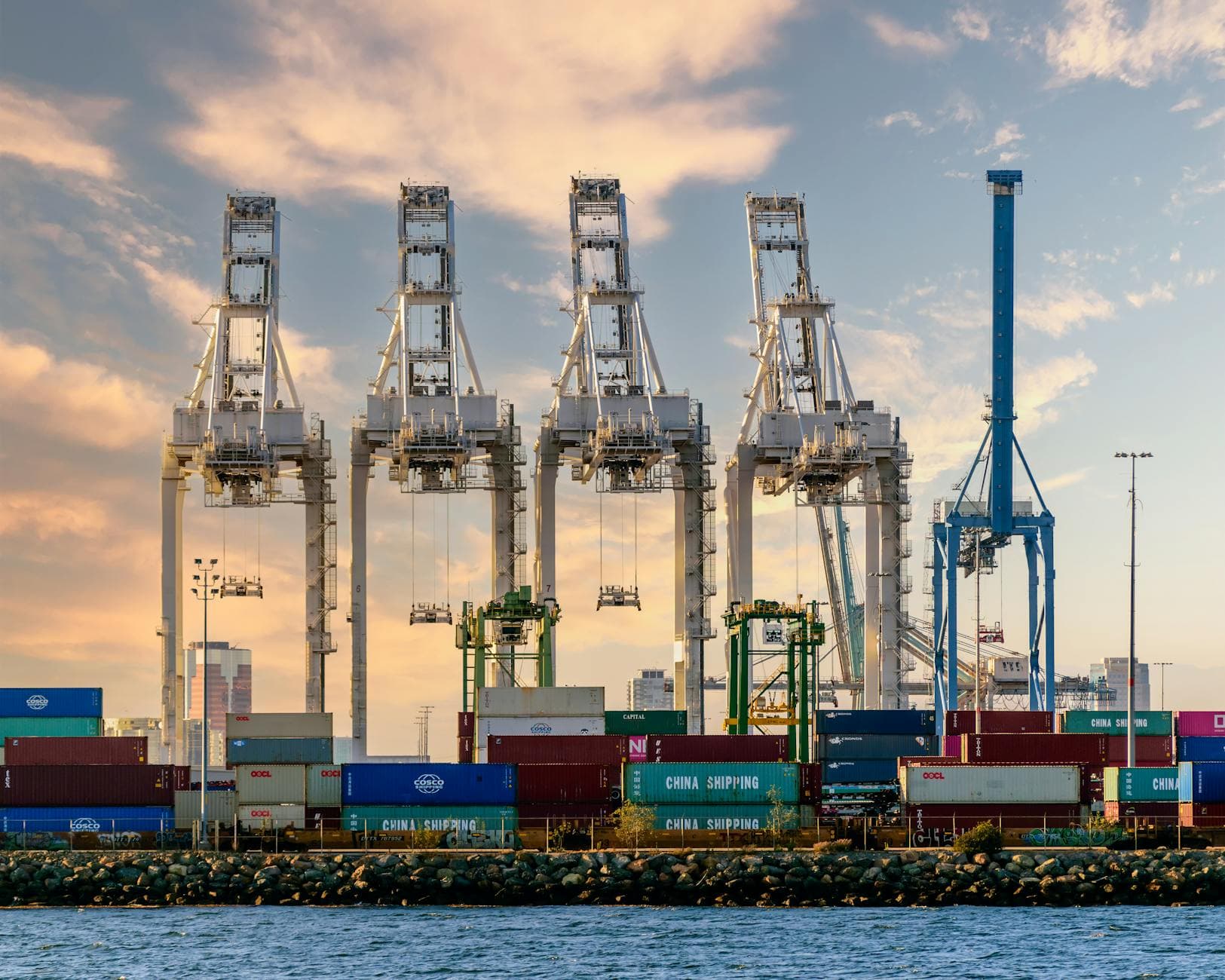
International freight moves in the ISO container — the standardized ocean box defined by ISO 668. The world counts these boxes in the twenty-foot equivalent unit: one 20-foot container is a single TEU, and a 40-foot container is two TEU, or one FEU[1]. Ship and port capacities are quoted the same way, which is why you hear vessels described as carrying tens of thousands of TEU.
Whatever the length, the box is the same 2.438 m (8 ft) wide — under ISO 668 for the 20-foot box[2] and the 40-foot box alike[3]. That 8-foot width is the constraint that matters inland.
Why the 53-foot box rules inland
North America's workhorse is the 53-foot domestic container. It matches the longest truckload legally allowed on the Interstate and shares the loading dimensions of a standard dry van trailer, so cargo palletizes and loads the same way[4]. It is also wider and taller than a marine box, so it simply holds more: a 53-foot box carries on the order of 26 floor pallets versus about 20 to 21 in a 40-foot ISO container[5] — roughly 37% more deck area by one carrier's own dimensions[6]. More room per trip means fewer trips inland.
~37% more deck area; the contents of roughly three marine boxes commonly fit into two domestic ones. Source: carrier dimensions, see citations above.
COFC vs. TOFC: why the container won
Federal regulation draws the line clearly: TOFC — "piggyback" — is the rail movement of a freight-laden highway truck or trailer, wheels and all, while COFC carries just a comparable intermodal container body[7]. Dropping the trailer's road gear lets two containers ride in a single well car, and that double-stacking is the whole efficiency story.
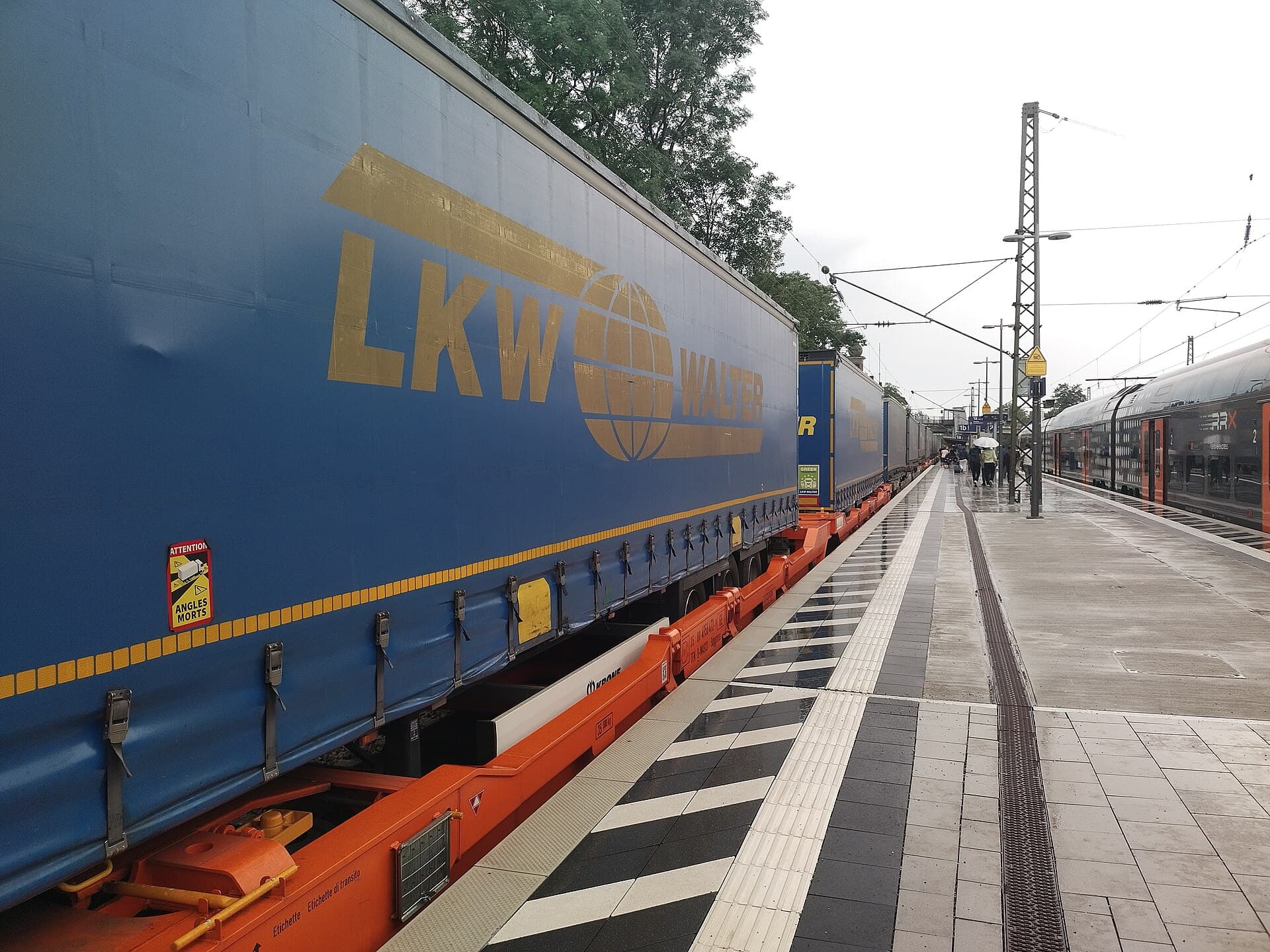
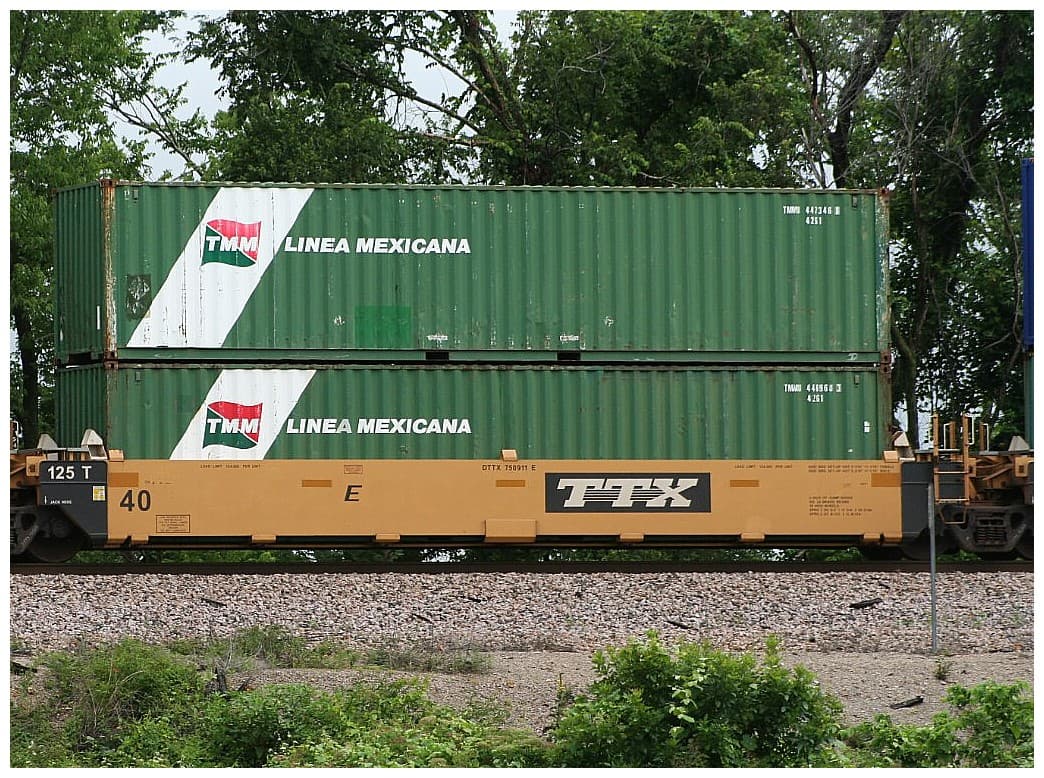
The shift has been overwhelming. The trailer-to-container mix moved from about 55/45 in 1990 to 25/75 in 2000 and roughly 9/91 by 2020[8]. The main brake is geography: double-stacking needs about 5.5 m of vertical clearance, so some bridges and tunnels still rule it out[9].
The transload: three boxes become two
The two container worlds meet at the port through transloading. Near the docks, the contents of arriving ocean ISO boxes are shifted into the larger 53-foot domestic containers for the inland leg. Because the domestic box holds more, the contents of roughly three maritime boxes commonly fit into two domestic ones, cutting inland transport cost by about 30% and freeing the marine boxes to cycle back quickly[10]. About 30% of containers handled by North American West Coast ports are transloaded this way before moving inland by rail[11].
An even split, two different jobs
Across the network the two equipment types are roughly balanced. In Q3 2025, IANA reported about 51% international ISO containers and 48% domestic containers and trailers, out of 4.76 million total loadings[12]. The takeaway: imports arrive in the world's standardized ocean box, but the deeper they travel into the continent, the more likely they ride in the bigger domestic 53-footer.