
Chapter 02 · The Tour
History & milestones
One steel box, a few stubborn engineers, and four decades of milestones built the freight system the world now runs on.
The intermodal industry is not one invention but a chain of them. A single sealed box only changes the world once everyone agrees on its corners, its rules, and the equipment that carries it. The milestones below trace that chain from the first containerized sailing to the 53-foot domestic box that dominates North American inland freight today.
The milestones
1956
The Ideal-X sails
On April 26, Malcom McLean's converted tanker Ideal-X left Port Newark, New Jersey for Houston carrying 58 thirty-five-foot truck boxes on deck. It was the first containerized commercial voyage and the symbolic birth of containerization, replacing slow, hand-loaded break-bulk cargo[1].
Mid-1950s
Tantlinger designs the locking corner
Engineer Keith Tantlinger worked out the corner casting and the twistlock that let boxes lock together, stack, and lift cleanly between ship and shore. These few cast-steel fittings turned a plain box into a unit that any crane, chassis, or rail car could handle [2].
Late 1960s
Sea-Land gives the patents away
Tantlinger pressed McLean to surrender Sea-Land's exclusive rights, and McLean agreed to release the corner-fitting and twistlock patents royalty-free. That choice let every builder worldwide adopt one shared design, clearing the path to true international standardization [3].
1968-1970
The world agrees on a box
ISO 668, first published in 1968, fixed the external dimensions and ratings of Series 1 freight containers; the corner-fitting recommendation ISO/R 1161 followed in 1970. With shared measurements, boxes filled in one country could ride a ship, train, or truck in any other [4].
1980
The Staggers Act frees the railroads
President Carter signed the Staggers Rail Act (Public Law 96-448) on October 14, 1980, deregulating rail economics so carriers could price competitively and sign confidential shipper contracts. That pricing freedom is what made the intermodal and double-stack economics of the next decade viable[5].
1984
APL doubles the train
American President Lines launched the first all- double-stack "Stacktrain," running Los Angeles to South Kearny, New Jersey with Union Pacific. Stacking two containers per car roughly doubled what a train of a given length could haul. Double-stack well cars had been developed in the late 1970s and first deployed around 1981, but APL was first to commercialize a dedicated service[6].
1989-1990s
The 53-foot box takes over
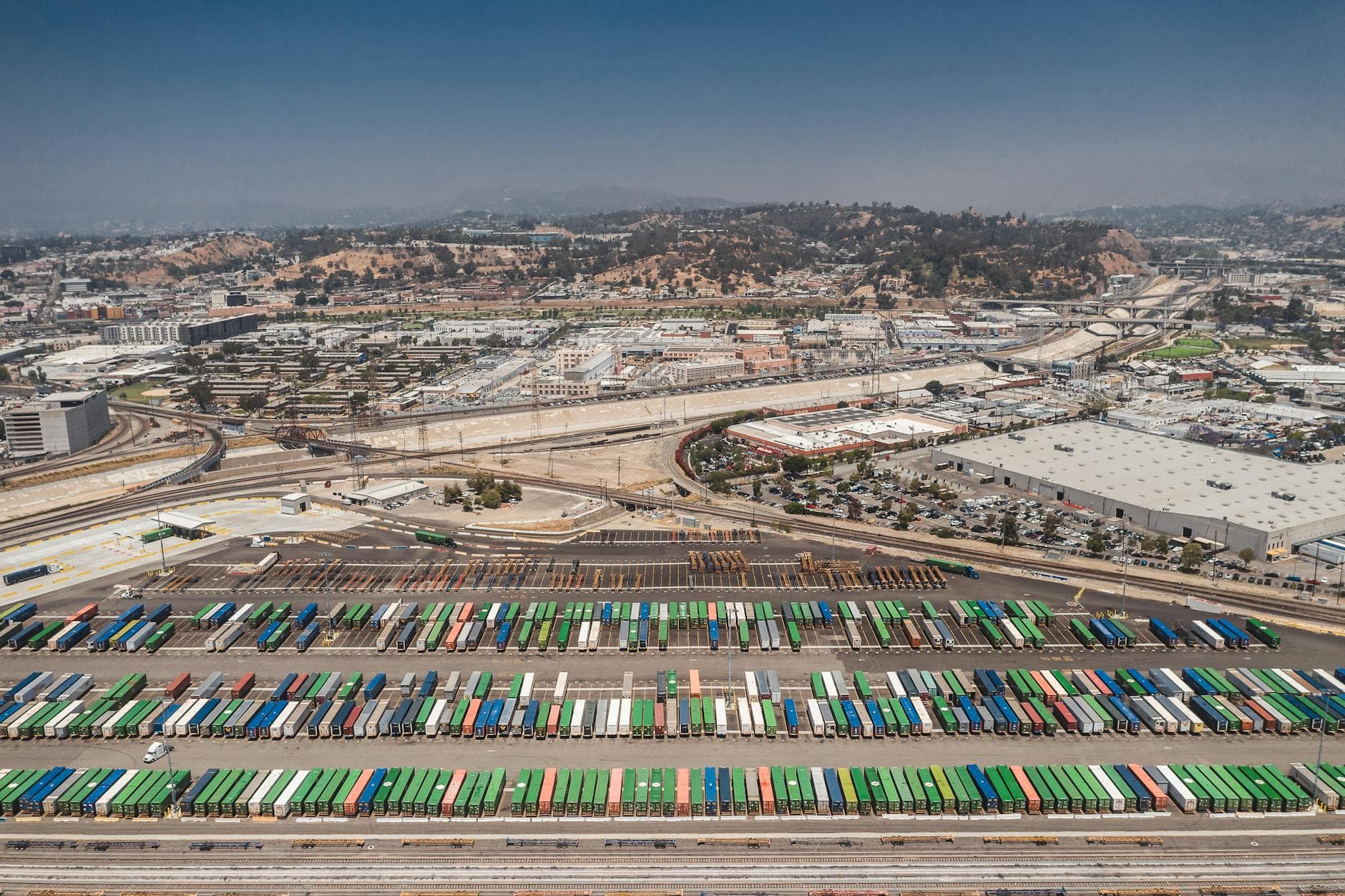
North America introduced the 53-foot domestic container in 1989, just ahead of a federal rule permitting 53-foot trailers from 1990. Longer, wider, and taller than an ocean ISO box, it grew through the decade into the dominant inland intermodal unit, with 48-foot boxes a brief interim step[7].
Watch: the invention that reshaped trade
How Malcom McLean's standardized box went from a 1956 experiment to the backbone of the global economy.
Containerization: The Most Influential Invention That You've Never Heard Of
Wendover Productions (embedded via YouTube)